
Even if you’re ready to split up with your spouse (or you already have split up), being served with divorce papers is not a good feeling. If you’ve been officially served, it’s vital you call us at Skillern Firm Divorce & Child Custody Lawyers right away. If your ex has started divorce proceedings against you, it’s crucial to respond promptly. With a lawyer, you can get a handle on your half of the divorce and help expedite the entire process.
Do I Need A Lawyer For A Divorce
Do I Need a Lawyer
for a Divorce
in Houston?
Divorce is widely considered one of the most stressful events in someone’s life, particularly because it can be fraught with various emotional and legal challenges. It also involves significant decisions that can often impact more than just the two parties involved.
Crucially, divorce is also a legal process. Texas family law involves numerous requirements for both parties, and, like any legal process, hiring a dedicated divorce lawyer is often the best way to achieve a favorable result in your case.
When you hire a lawyer from Skillern Firm Divorce & Child Custody Lawyers to assist in your divorce, you’ll not only benefit from our 160+ years of collective legal experience, but you’ll also have the reassurance of someone who is actively working in your best interests.
Our office handles all types of divorce cases across Texas, and we’re ready to place all that knowledge and expertise at your disposal.
Call us today at (713) 229-8855 so our attorneys can start providing the legal information you need to move forward.
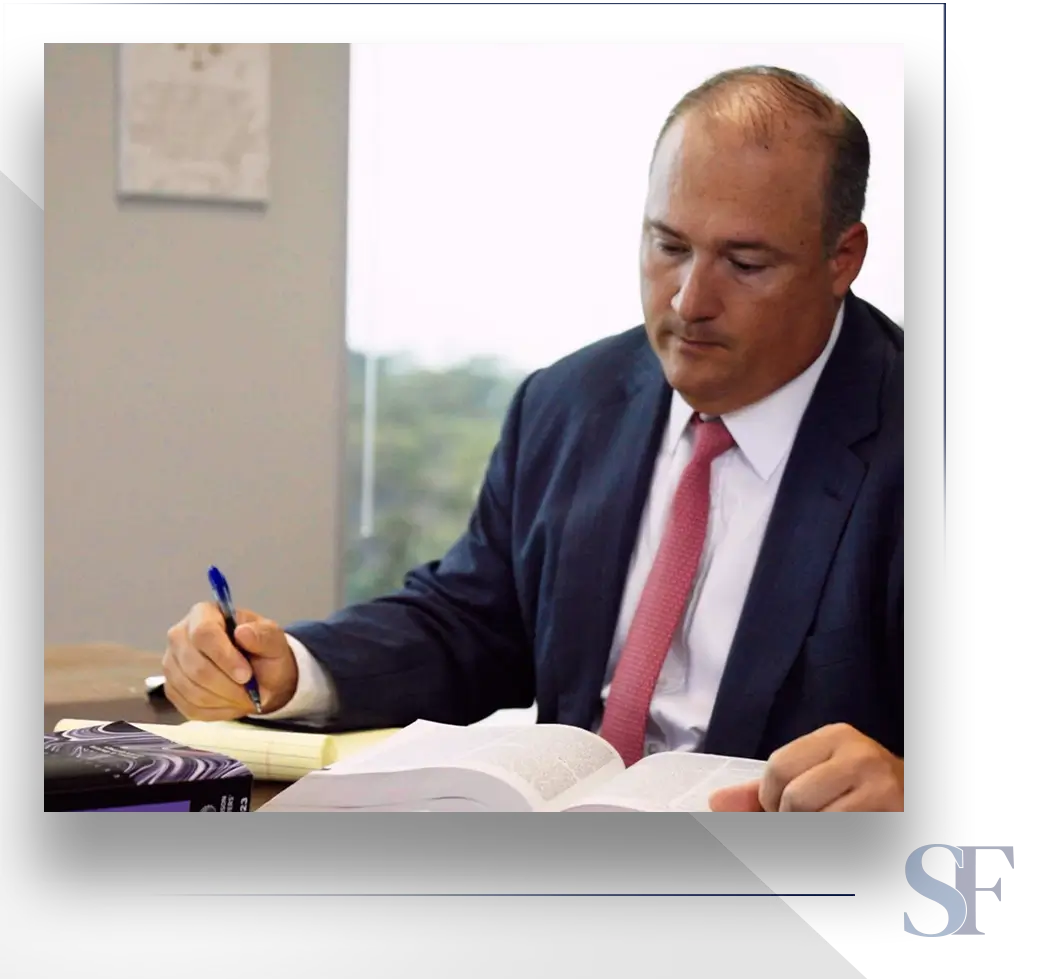






















Reasons To Hire a Divorce
Attorney in Houston
When you face an important life event, it’s vital to call upon a knowledgeable party to achieve the best possible outcome. Not only can retaining a lawyer make life easier in trying times, but they can also ensure you have a complete understanding of Texas family law. This often means that the entire divorce process, regardless of circumstances, will take place on a level playing field.
You Have Been Served with Divorce Papers
Your Spouse Has Hired An Attorney
If your spouse has hired an attorney, then you want to reciprocate. While you could technically represent your own interests, this is not advisable. As with any other legal issues, you need an experienced attorney who has the skills and expertise to help you navigate the complicated divorce process. When you have an expert on your side, you’ll feel much more confident during the entire process.
You Need to File a Fault-based Divorce in Texas
Texas is one of several states that allow married people to choose between a fault or no-fault divorce. Many couples chose no-fault divorces because they are often more simple, quicker, and less costly. Yet, certain situations warrant a spouse filing for a fault divorce. The major difference between the two types of divorce is that the person who files a fault divorce must do so on certain grounds, and they must justify those grounds.
Courts do not benefit from forcing a couple to remain married, but Texas judges have the power to determine other outcomes. No-fault divorces typically default to an equal division of assets and joint custody if children are involved. In a fault divorce, judges are more likely to adjust the division of assets, order different conservator arrangements, and make other changes based on the grounds of the fault divorce.
Under Texas law, grounds for a fault divorce include:
- Cruelty
- Adultery
- Criminal Felony Conviction
- Abandonment
In each of these situations, you must provide clear and convincing evidence to the court to prove your grounds for divorce. Sometimes the time, money, and energy required to gather the appropriate evidence cost more than hiring a lawyer to help. Our experienced family dispute lawyers in Houston know the information you need to provide clear and convincing evidence for the court to grant your fault divorce. Attorneys have professional networks and in-house resources that include an investigator, junior associates, paralegals, and others who will play their part to gather the proof you need for the judge in a fault divorce case.
Lawyers Serve as an Objective Third Party
Even the most amicable situations can quickly turn sideways during the divorce process. When a spouse doesn’t compromise, it can be frustrating beyond words. In some situations, a spouse has taken actions that sadden or anger the other, leading to a strong desire to get revenge. Sometimes, the act of filing for divorce is hurtful if it seemingly came out of nowhere. Regardless of the exact situation, divorce stirs up feelings, emotions and sometimes creates wounds or brings past wounds to light.
It’s often difficult for the most relaxed and logical people to maintain objectivity during the divorce process. When you hire a lawyer, you have someone in your corner who is fighting for you. Lawyers aren’t emotionally connected to your spouse, so they also serve as a voice of reason and a layer of protection for costly or harmful choices you might otherwise make on your own as you go through a divorce. Your attorney has a legal obligation to act in your best interests, which sometimes includes protecting you from yourself to ultimately ensure you get the best outcome for a difficult situation.
For example, some spouses think an impending divorce justifies spying on their spouse, checking their email, searching their file cabinet, etc. Yet, this type of evidence is typically inadmissible in court because it’s likely your spouse did not permit you to go through their private things. An attorney knows how to get the information they need to build your case and make sure they can use the evidence in court.
You Have Children
One of the most challenging situations to deal with during a divorce is those that involve children. In fact, children up the complication factor exponentially. Now, you’re not just dealing with divorce, but also child support, custody and visitation, too. At Skillern Firm Divorce & Child Custody Lawyers, our expert attorneys are not only ready to fight on your behalf, but they’re also compassionate when it comes to dealing with children.
We understand how much you love your family, and we’re ready to look out for your best interests. Your kids come first, and we get that. That’s why we approach every case with the ferocity and passion it takes to attain the goals you want, particularly when it comes to keeping your children’s best interests.
You Are a Victim of Domestic Violence
If you have suffered abuse during your marriage and fear for your personal safety or the safety of your children, a lawyer in Houston can help you file for a Texas divorce on the grounds of cruelty. If you choose to file for divorce, the biggest challenge is often moving out of your home. It’s not uncommon for spouses to stalk or chase after a partner who attempts to leave. Sometimes domestic abuse victims worry about escalating violence by leaving. You will likely need to move someplace where your spouse cannot locate you. Your lawyer will be your contact point, and he or she can also file for a restraining order against your spouse, making it illegal for your abuse to contact you or come near you. If you have children, your attorney can file a restraining order ahead of time, so your spouse cannot accuse you of kidnapping if you take your kids with you.
Protection of Assets
The division of marital assets can be a highly contentious part of any divorce. Texas is a community property state, and courts presume all marital assets are community property to be equally divided unless you or your spouse claim otherwise. Regardless of which side you are on, your attorney can help protect your assets or ensure you get your fair share. If you choose not to hire legal counsel for your divorce, you risk losing assets to which you are entitled.
You or your spouse must provide evidence that an asset is a separate property for a judge to stray from the Texas community property presumption. If your spouse tries to claim a particular asset is separate when it really shouldn’t be, your attorney can help provide evidence to ensure you get your share of the asset. For financial assets, this means you get half. In other cases, the court might order the sale of an asset, so you and your spouse can split the proceeds. Your lawyer can also help you prove an asset is separate and that your soon-to-be-ex is not entitled to any part of it.
Unfortunately, some spouses do not play fair, and they hide assets, especially high-value assets. Sometimes this deception begins early on in a marriage, and other times a partner takes the time to tuck away assets in preparation for a divorce. A skilled family dispute lawyer in Houston can help you track down hidden assets so that the Texas court can award you your share.
Your Spouse is Hiding Marital Assets
If you suspect your ex is intentionally hiding marital assets, you need to contact the Skillern Firm Divorce & Child Custody Lawyers right away. Hiding assets is a very severe transgression during divorce proceedings and should be investigated immediately. Assets can include stocks, investments, business interests, real estate, savings, and other income or property types. You deserve your rightful half of the assets or whatever your prenup states you’re entitled to, and we can help you fight for it.
Protecting Business Interests
If you had a business before you got married or started a business during your marriage, you most definitely need an experienced lawyer to protect your business interests during divorce. This is even more true if you have a family business that you and your spouse run together. The simple fact is that if you do not have a prenuptial agreement in place that protects your business, your spouse has a stake, even if they did not help build the business.
Disagreements about business assets are sometimes contentious, but in the worst cases, they can put you out of business. Rumors about divorce and fighting create uncertainty for customers and shareholders, if applicable. A lawyer can help you take steps to protect your business’s success and come up with an agreeable division. This might include shared profits but often includes one spouse buying out the other’s interest. A lump-sum buyout could lead to a financial catastrophe, so your lawyer can help arrange the plan that works best for your situation.
Negotiating Spousal Support
If a large income gap exists between you and your spouse, there is a good chance you will pay or receive spousal maintenance or alimony as a part of your final divorce agreement. Unlike child support, which requires the payment of a clear percentage based on income, spousal support varies greatly among divorces. Judges review certain aspects of a case to decide if they will allow spousal maintenance and then review other things to set an amount.
If you and your spouse cannot come to an agreement about spousal maintenance, and you let the court decide, one or both of you might hate the outcome. It’s far better to negotiate support as you discuss the division of your assets and come to an agreement. In either case, a lawyer is an important part of the process. Lawyers help negotiate and sometimes facilitate mediation, so you can reach an agreement before your final divorce date.
If you need to go to court to let a judge determine whether you should receive or pay spousal maintenance, the judge will review several factors, including:
- Fault. If you or your spouse is filing for a divorce based on grounds of fault, the exact justification for your divorce can play a role in spousal support. When adultery, domestic violence, or substance abuse were factors in your marriage, spousal support is likely. If you are at-fault, you cannot typically collect spousal maintenance. If your spouse is at fault, the court might award spousal maintenance as punishment.
- Finances. The court will evaluate you and your spouse’s income, debt, and earning capacity. They will also take into account the way child custom impacts a person’s ability to earn money.
- Health, Age, and Length of Marriage. The court evaluates these things and often awards spousal maintenance when couples have been married for more than 10 years.
- Tax Implications. Judges typically do not order alimony if it leads to a negative tax situation for either you or your partner.
Hiring an attorney can impact whether you pay or receive spousal support. If you want to avoid a high payout, you need a lawyer to fight for you by building a case that shows the amount of support requested is unreasonable. If you are requesting maintenance, you need a lawyer who can help you build a case for why you need support after divorce. Failure to get the legal help you need could result in you paying far more maintenance or receiving much less maintenance than you should.
You Do Not Have a Prenuptial Agreement
Another situation where you need a lawyer in Houston, Texas is when you don’t have an official prenuptial agreement. A prenup is a legal contract that usually states the terms of the marriage and what occurs should the couple split up or divorce. If you don’t have a prenup, your divorce could get very messy.
When you need superior legal help with your impending divorce, we’re just a phone call away and ready to help. Our attorneys have years of experience with divorces of all kinds, including those without prenups. When you need help with a divorce, contact us immediately for a consultation.
You Have End-of-Life or Estate Plans
If you’ve made end-of-life plans since being married, then you will require the services of an attorney to help you during proceedings. Most end-of-life plans ensure that your family will be protected in the event of a loss. However, once divorced, there’s a good chance you’ll want to alter those plans. Whether it’s changing a will or life insurance beneficiary or assigning a different power of attorney, we can draw up the proper documents for you, ensuring that the old versions are null and void.

Tina Floridia was and is a true God Send.
“I can’t imagine I would have made it through my divorce, mentally or emotionally, without her. She is insanely intelligent and astute, she is on top of absolutely everything family law related, responsive, reassuring, and gives you confidence in a very unfamiliar world. She’s prompt, factual, strategic, and exactly what you hope for in a lawyer if not more. You can depend on her. Tina is also phenomenal in court. She found so many discrepancies in my ex’s attorney’s work. It was not only impressive, but revealed how detrimental things can be without a truly thorough lawyer like Tina.”
Matt was truly exceptional in representing me in my children's custody case with my ex.
“Not one detail missed and with the situation where my children were at risk, the extra care and attention made all the difference to get full judgement in my favor. I highly recommend Matt and his team!”
Matt Skillern is a brilliant outstanding and excellent attorney who is professional, honest and intelligent.
“Skillern Firm is the best attorneys in Houston. He genuinely cares about his clients and his firm is diligent, hardworking and very through. I highly recommend him and do not have enough words to thank him for his extraordinary performance in getting justice for my family.”
Skillern Law Firm are by far the best. The most responsive and empathetic.
“I have used several family law attorneys in the 10-17 years and my ex takes me back to court every year. I have worked with Matt Skillern, Caitlyn Thorpe, and Stacy Sawyer. I would never go elsewhere. If you want it done, and done right, do not hesitate to contact them. I have had terrible experiences with all of the family law attorneys I have dealt with outside of them. I only provide positive reviews so my bad experiences are not noted. If you want a positive and good experience, pls go there!”
I can’t say enough good things about Caitlin Thorpe and her amazing team.
“The communication is top notch from her to her staff. Her responses were quick at all times, and never left any questions unanswered. I always felt how important my case was to her. Caitlin is an amazing, trustworthy, brilliant, and beautiful human who truly cares about her clients and will fight hard for them. Caitlin isn’t scared to speak out and won’t sugarcoat anything. She knows family law extremely well and during trial always knew the facts of my case very well, was familiar with all details and effectively fought for my kid's rights. I couldn't have been happier with Caitlin and the outcome of my case. I only wish I would’ve hired her sooner, right when the divorce started. Anyone would be so lucky to have her as their attorney.”
Understanding Your Rights
With a Divorce Lawyer
As well as aiding the progression of a divorce, when you hire an attorney, they will also work to ensure your rights are protected. They understand the law, particularly specific information related to the state of Texas, and how it applies to you and your spouse.
They can outline your options in each case. Generally speaking, while a divorce can end up at trial, attorneys will generally attempt to avoid that outcome unless your spouse is particularly against reaching an amicable decision.
Even when disagreements between spouses remain, they may suggest less stressful and intrusive resolutions, such as mediation.
As part of mediation, each spouse and their attorney can discuss the case with a third party before getting divorced, without necessarily divulging confidential relationship information. Essentially, it’s an effort to work out all elements of the case before going to court, leading to a far simpler process.
When Is the Best Time to Hire an Attorney?
As with any legal case, sooner is almost always better when hiring attorneys. It’s easy for an upcoming divorce to play on your mind or hamper your lifestyle. The sooner your attorney is in place, the quicker they can start providing support and guidance.
Even if you have already commenced the process without support from divorce lawyers, they can join at any stage to ensure the case proceeds as you would hope.
Dangers of Not Hiring a Divorce Lawyer
If you and your spouse have little or no marital assets, and you don’t have children, you might be able to muddle through the divorce process on your own.
However, the vast majority of couples have at least one issue that warrants hiring an attorney. Although you might not need a family lawyer for your divorce, it’s ALWAYS in your best interest to consult with an attorney if you want to file papers or if your spouse has filed. Our family lawyers in Houston can evaluate your situation and let you know specifically how they can help you.
In many divorce situations, individuals who do not hire a lawyer risk one or more of the following:
- Losing assets
- Paying unreasonable spousal maintenance
- Not receiving spousal support they deserve
- Losing custody of a child/children
- Damaging a business reputation
Even if you and your spouse seem to agree on the big things, it’s likely you have still overlooked potentially contentious issues involved with the smaller details of your divorce. You need a family dispute lawyer, especially in Houston, to ensure you receive fair treatment and protect your rights. In case you aren’t yet convinced about the benefits of hiring a good lawyer, keep reading to learn about times when you absolutely need a divorce and specific ways a family dispute attorney can help you with your divorce in Houston.
Hire a Divorce
Lawyer From
Skillern Firm Today!
Divorce is always a sensitive subject, and seeking out legal representation that will work in your best interests is vital. There are many important issues involved when you get a divorce, and a lawyer from Skillern Firm Divorce & Child Custody Lawyers can help you throughout your divorce case from the initial filing to finalization.
No matter which stage of divorce you’re at, the support and expertise of an experienced attorney can be invaluable. We will work with you to assist with everything from paperwork to negotiation, and everything else a divorce entails.
Divorces are rarely easy, but your attorney at Skillern Firm will do everything possible to make your divorce as comfortable as can be, all in pursuit of the best possible outcome.
Our office is standing by to take your call, so reach out today at (713) 229-8855 to get the proceedings underway.

Schedule A Consultation Today
Customized Representation Starts Here

© Copyright 2026 Skillern Firm. All Rights Reserved.
